
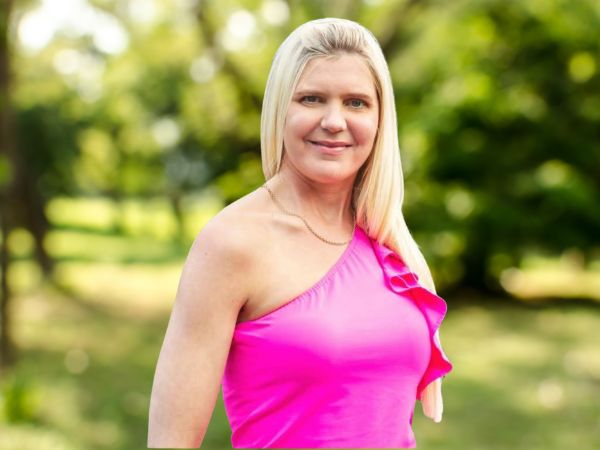
My name is Hannah, and I refused to let Multiple Sclerosis decide my life
Posted on 2025-12-27 By : Hannah Aitken
At 19, I got shingles. Looking back, that was a warning sign. At the time, I still didn’t connect the dots. I was stubborn—still am—and determined to live my life without labels. Multiple sclerosis was the last thing on my mind.
MS runs quietly through my family. My uncle developed it in his late thirties and was in a wheelchair not long after diagnosis. We knew what the disease could do, but we also believed optimism mattered. I clung to that belief fiercely.
In my early twenties, my body became harder to ignore. I had constant urinary tract infections. I started dropping things. My left leg dragged, then my entire left side followed. It felt like a stroke in reverse—every day, instead of improving, I got worse. Still, I told myself I was fine. I went to university. I tried to be “normal.”
Eventually, I couldn’t get out of bed.
At 24, I lost my vision. My body felt like concrete. I had no choice but to go to hospital. An MRI and lumbar puncture confirmed what I had spent years avoiding: relapsing remitting multiple sclerosis. I didn’t want to be sick. Who does? I thought not knowing would somehow be easier.

Treatment followed—some of it brutal. Weekly injections that left me bedridden for days. Welts on my skin. Pain that never really left. But MS is unpredictable. Between relapses, I lived well. I had my daughter, Billyrose, on the eve of my 27th birthday. Becoming her mum gave me a new kind of strength. I had to keep going—there was no alternative.
I found the gym during a good phase and never let it go. On bad days, when I needed a walker, I added weights to it. Movement became my rebellion. Even when my legs trembled uncontrollably at a U2 concert in 2019 and people assumed I was drunk, I kept showing up for myself.
Then came 2020. The pain turned savage. Nerve pain in my feet and legs felt like someone pressing a cattle prod against my skin. I wanted my legs amputated just to make it stop. By the time I was admitted to Auckland Hospital, I was using a walker full-time. When my neurologist told me it was time to walk again, I realised something terrifying: my brain had forgotten how.
I had to relearn everything—standing, turning corners, trusting my body. I shuffled like a robot. But I didn’t quit. With relentless rehab and sheer will, I made my way back to the gym. In 2022, I even stepped onto a bodybuilding stage. I didn’t do well, but I wasn’t done. In 2023, I returned and won gold in the Physically Challenged Standing division. Redemption matters.
Still, MS lingered. Pain, uncertainty, the constant fear of decline. I knew I couldn’t keep managing symptoms—I needed a chance at real recovery.
In 2024, I made one of the biggest decisions of my life: to undergo autologous bone marrow transplant (AHSCT) in India at Apollo Hospital under the care of Dr Gaurav Kharya.
It wasn’t an easy choice. It was scary. It was far from home. But from the first conversation, I knew I was in the hands of someone extraordinary. Dr Kharya didn’t just see my disease—he saw me. He explained everything with clarity and compassion. He gave me something I hadn’t felt in years: genuine hope, grounded in science.
The transplant was tough, but it was also transformative.

Today, I can say this with gratitude and disbelief—I walk without pain. I exercise freely. I live without the constant shadow of MS dictating my days. I feel normal in a way I once thought was impossible. The woman who once needed a walker now moves with confidence and strength.
Dr Kharya gave me more than treatment—he gave me a new lease on life. I admire him not just as a brilliant doctor, but as a human being who understands what hope means to patients like me.
MS shaped me, but it does not own me.
I am a single mum. I run a business. I lift weights. I dream big. And I will always try—because choosing life, fully and fiercely, is the one thing MS never took from me.