
From Misdiagnosis to Miracles: How My Little Girl Nadeen Beat the Odds
Posted on 2025-11-21 By : Jerusalem
When I first held my daughter Nadeen in my arms, I felt a kind of love I had never known before. She was my first child, a beautiful baby born in Ethiopia, filling our lives with laughter and light. Like any mother, I dreamed of a bright, carefree childhood for her—playgrounds, birthday parties, and the first day of school. But life, as I would learn, had other plans.
It started with small things. Nadeen would often fall sick. Frequent infections, fevers that refused to settle, and bruises that appeared for no obvious reason. We visited hospital after hospital, and each time we were told that children get infections, that her immunity would improve as she grew. She was treated symptomatically—antibiotics, rest, and reassurance. But as her mother, I could sense something deeper was wrong.
Months later, as the bruises became more pronounced and she grew weaker, doctors ran more tests. The diagnosis came as a shock—Acute Lymphoblastic Leukemia (ALL). It felt like the ground beneath us had vanished. Still, we held onto hope. She began chemotherapy immediately. I watched my cheerful five-year-old lose her hair, her energy, and at times, her smile. Yet, the worst part wasn’t the visible pain; it was the helplessness of seeing her treatments bring little relief.
When her condition didn’t improve, further investigations revealed that Nadeen had been misdiagnosed. Her real illness was Acute Myeloid Leukemia (AML), a different and more aggressive form of blood cancer. My heart broke once again. The delay in the correct diagnosis had allowed the disease to progress, and the earlier treatment had taken a toll on her tiny body. The side effects of the delayed diagnosis were devastating—her immunity dropped, infections became frequent, and her little body weakened before the right battle had even begun.

We brought her to India for better treatment options. There, she received chemotherapy for AML. For a while, we hoped it would work, but once again, the cancer didn’t respond. I will never forget the day the doctors told us to take her back home, implying there was nothing more to do. But as a mother, giving up was never an option.
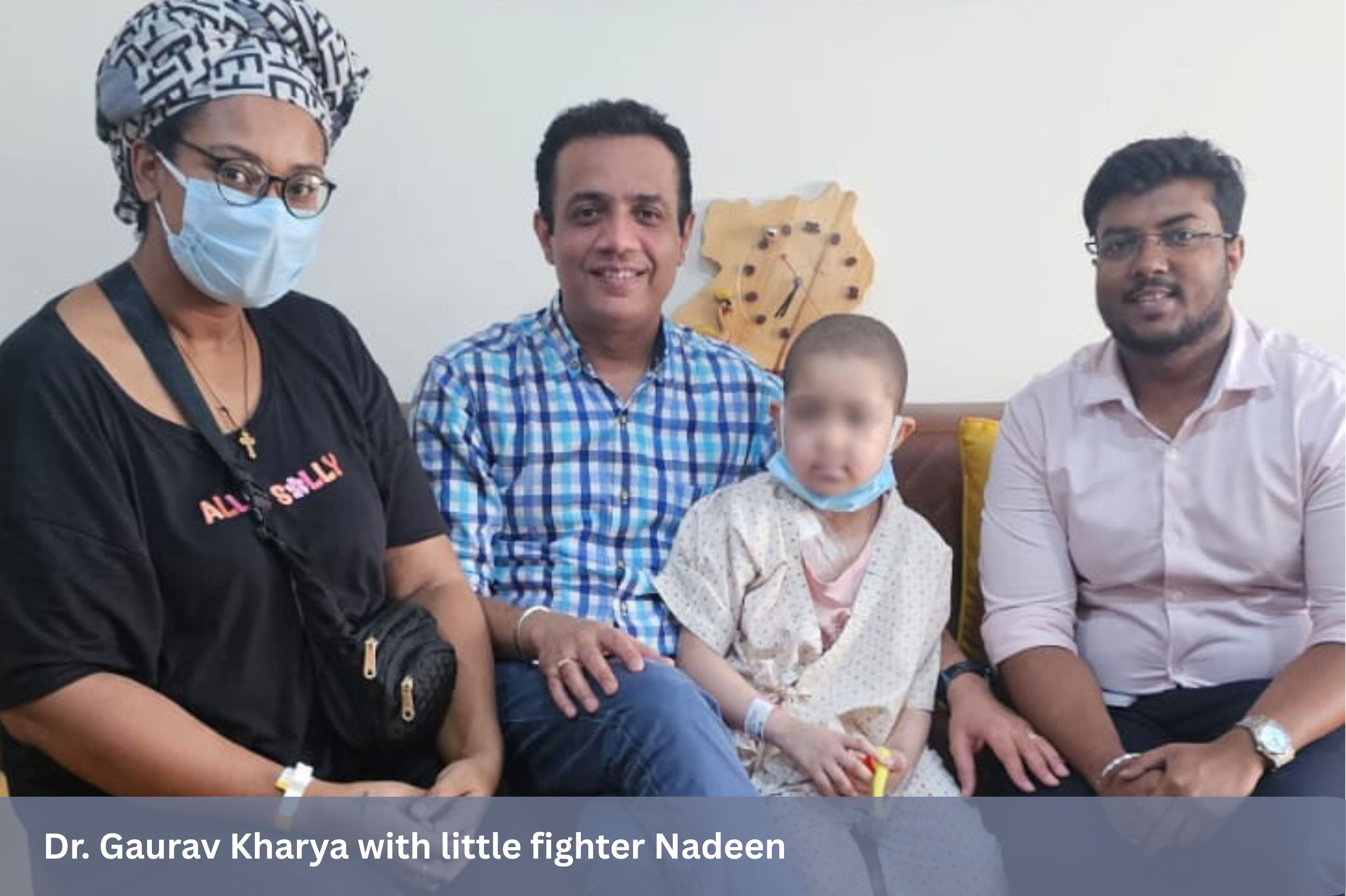
That was when we met Dr. Gaurav, a name that became a turning point in our story. He carefully studied Nadeen’s medical records and noticed something that had been missed earlier—CD33 positivity. This finding gave us a new glimmer of hope because it meant Nadeen could receive a specialised drug called Gemtuzumab as part of a salvage chemotherapy plan. After a long and detailed discussion with Dr. Gaurav, we agreed to go ahead with this treatment before considering a bone marrow transplant.
Those two months were among the most rigorous days of our lives, filled with blood tests, infusions, and anxious waiting. But they also brought us the most rewarding news we had ever heard: for the first time, Nadeen’s disease was in remission. For the first time, we could breathe again and start preparing for her bone marrow transplant.
I became her donor. Before the transplant, Nadeen underwent several more chemotherapy cycles to prepare her body. Then came the bone marrow transplant—a procedure that tested her strength, our faith, and our endurance over the next three months. Between hospital stays, endless tests, and sleepless nights, I put my business aside to be fully with her.
Today, Nadeen is recovering well. Her smile has returned, her laughter fills our home again, and she plays with her dolls like any other child. Yet, we remain cautious. Post-BMT care is crucial, especially during the first year. She stays in isolation, shielded from infections, but her spirit remains unbroken.
Every day, I thank God for giving us another chance. Nadeen’s journey has taught me that a mother’s strength knows no boundaries, and that hope, when guided by science and compassion, can bring even the most fragile hearts back to life.
(Views expressed in the article are that of writer’s personal)